


The Blog
How to Teach Mindfulness to Kids: A Simple Technique That Actually Works
This post may contain affiliate links. As an Amazon Associate, I earn from qualifying purchases. Please read my full disclosure in the terms & conditions.
Before I began working in pediatrics, I got my start in OT working in an inpatient behavioral health center, where I led groups focused on mindfulness, emotional regulation, and positive coping skills. During that time, I accumulated lots of great strategies that help children and adults manage stress, anxiety, and big emotions. There was one simple, mindfulness technique that consistently stood out. It was easy to learn, easy to remember, and a powerful daily ritual. Years later, it’s still one of my favorite mindfulness activities for kids.. and myself!
Nearly a decade ago, I began using this mindfulness strategy as an end-of-day ritual for myself. When I told my then boyfriend about it, he seemed to really like the idea, and now we use it as our nightly, check-in ritual before bed. We’ve been together for over 10 years. I’m not saying that it was this mindfulness activity alone, but it didn’t hurt!
So, What is this Mindfulness Strategy?
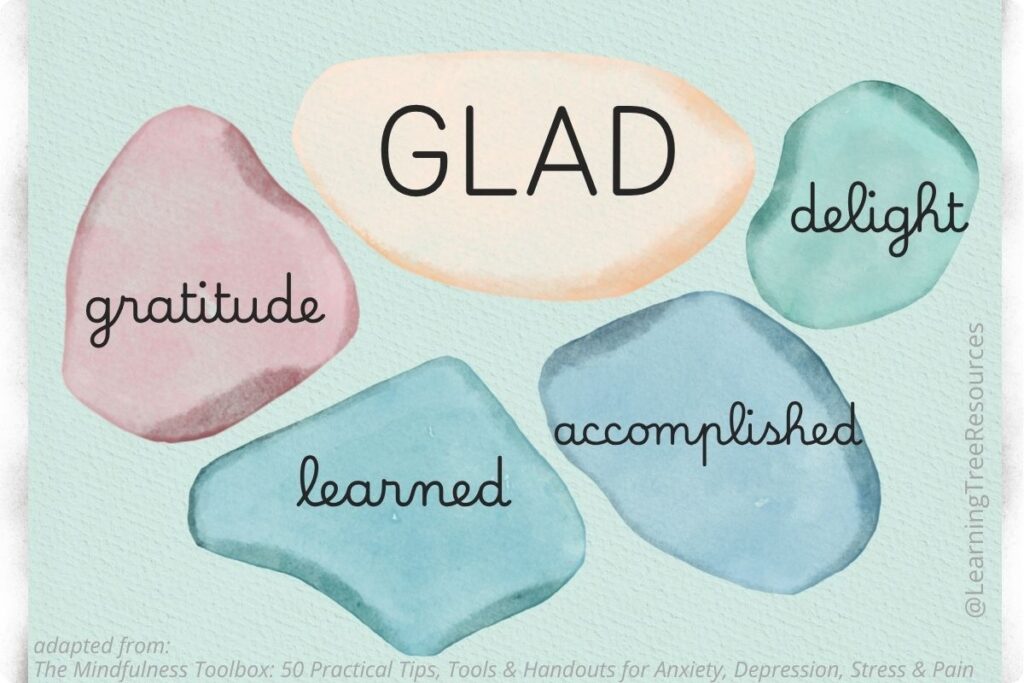
It is called the GLAD Technique. This simple, mindfulness practice encourages kids to slow down and pay attention to the positive aspects of daily life. Paraphrased from Donald Altman’s The Mindfulness Toolbox, GLAD is an acronym for:
G: One thing you’re Grateful for today
L: One new thing you Learned today
A: One small Accomplishment for the day
D: One thing that gave you Delight today
How does the GLAD Technique work?
As humans, kids’ brains are wired to worry often about the future (homework piling up, tomorrow’s quiz, and what their classmates think of them) and ruminate on negative events (cue that mental replay of the jokes that didn’t land right, getting called on in class and giving a wrong answer, or how that one kid cheated in your favorite game). The GLAD Technique disrupts this train of negative thoughts in the moment, but more importantly, it encourages you to look for the positive moments throughout your day.
Let’s use the A (Accomplishment) as an example. If I know that later today, I will be asked to recall one thing I accomplished, suddenly my brain starts to flag all sorts of proud moments, no matter how small (I got out of bed today, I turned in the assignment on time, I said something kind to a friend). And guess what? If my brain is taking note of small accomplishments a few times throughout the day, then I might start to feel accomplished, worthy, and confident too! Those moments and feelings add up.
But what about on those terrible, horrible, no good, very bad days?
Even on truly rotten days, there are things to be grateful for. Kids will surprise you! If you pose it as a “challenge” to find delight or gratitude, suddenly the conversation shifts into excitement as kids rack their brain trying to think of as many crumbs of positivity as they can. Humor sometimes works well in this moment- Aren’t you grateful that you didn’t step in gum today or that Godzilla didn’t knock over our favorite restaurant? Me too!
After using the GLAD Technique nearly daily for years, I can assure you that what starts to happen is you begin to look for things to be grateful for, small wins and accomplishments, little curiosities and ah-ha moments, and morsels of joy.
Things shift in an important way over time. You give space for appreciation and joy (or at the very least, acknowledge instances of contentment, if you’re in an especially low place). You give yourself permission to feel proud and self-assured. You foster curiosity about the people and world around you, and you lean into a growth mindset by acknowledging incremental progress.
Do Mindfulness Strategies Help Kids?
Given that the onset of about half of all mental disorders occurs before the age of 18, childhood and adolescence is a crucial time to learn and practice positive coping strategies. Mindfulness interventions are effective tools for kids! Mindfulness was found to be beneficial for both depression and anxiety in children and teens under 18 years old.
A Daily Mindfulness Exercise for Kids:
You can use the GLAD Technique as a check-in with your child and make it a daily habit. This can bring families closer together and spark some interesting conversations!
- Some good times for a GLAD check-in with your kids include just before bed, during dinner, or during the car ride home from school. It’s important that whatever time you choose is free from distractions and a time that you can truly slow down for the moment. Choosing the same time everyday can help everyone remember & stay consistent.
- Keep this time flexible and informal- if it sparks an interesting conversation with your child, roll with it! But remember to come back to where you left off- G, L, A, or D.
- The format of GLAD can be a family conversation, but it can also be a powerful, reflection tool for individuals. Older kids or teens may feel more comfortable using the GLAD technique privately in a written journal, on the notes app, or as a short drawing exercise each day. If your child is finding joy from a quiet time alone to reflect through journaling or art, encourage daily practice by providing a special journal or a designated spot to keep those colored markers.
- As a parent, model the GLAD process yourself. This means modeling for your child that it’s okay to sometimes struggle to think of a delight or gratitude on a day that you’ve been stressed. This signals to your child that this is a safe space for them to be vulnerable and share honest feelings with you too. It also offers an opportunity for you to work together to think of some small appreciations for basic needs or reframe today’s “delight” as a moment of relief or contentment.
This mindfulness ritual may be simple, but it has made a profound impact on my life- incrementally through small, daily check-ins. Okay, at the risk of writing an even longer love letter for the GLAD Technique, here is where I leave you:
Start a Mindfulness Practice for Kids Today!
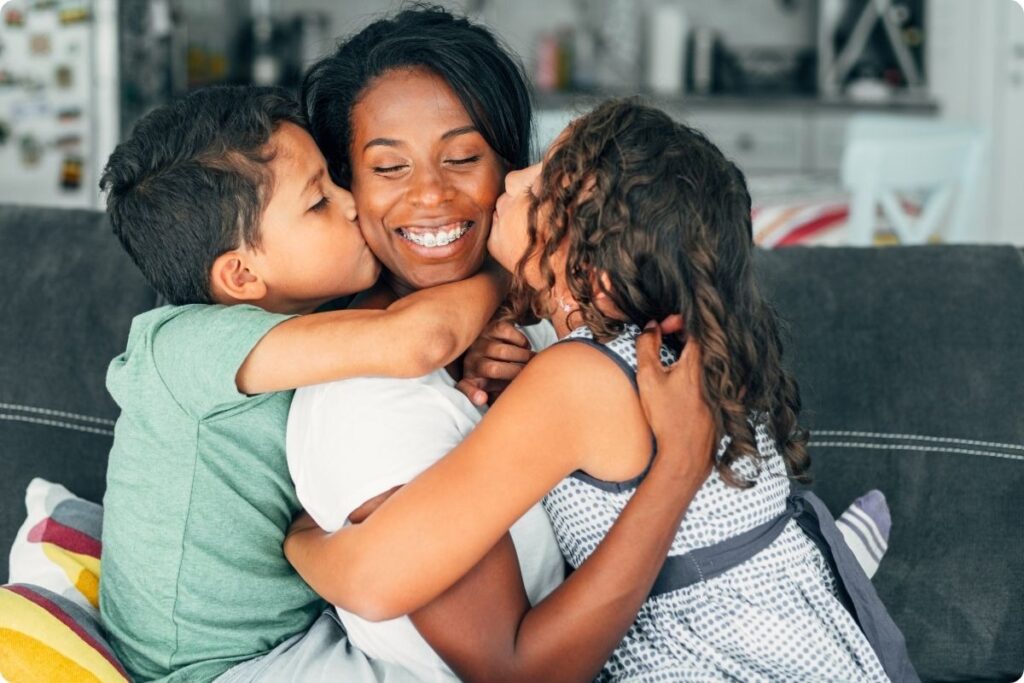
Talk about the GLAD Technique tonight over dinner, and I challenge you to implement the technique with your kids every day this week!
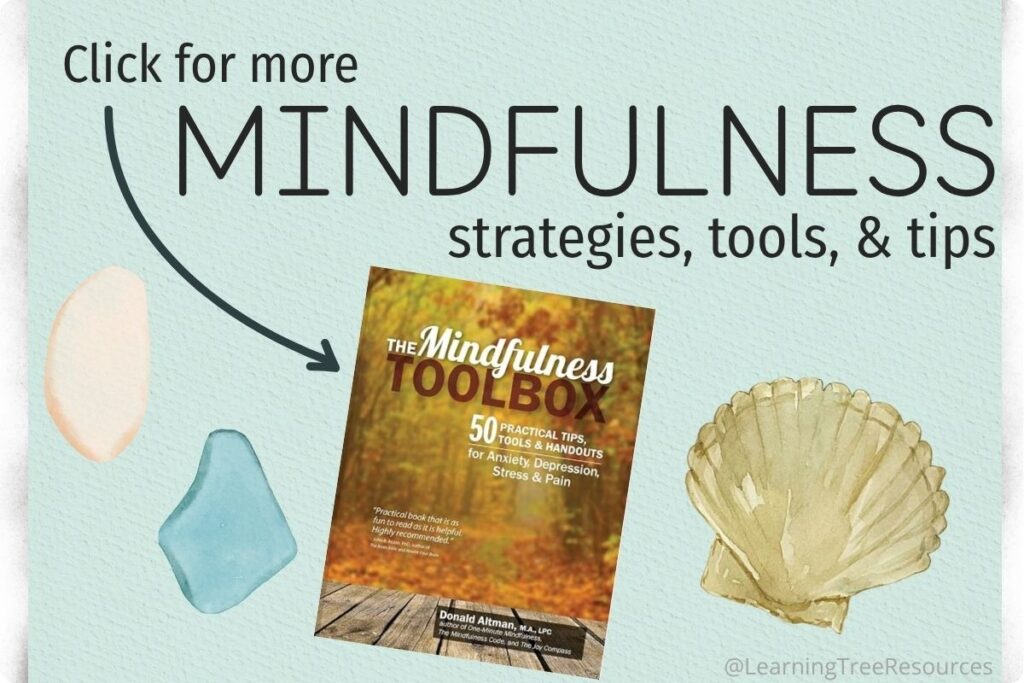
If you want even more mindfulness activities and strategies, I highly recommend Donald Altman’s The Mindfulness Toolbox: 50 Practical Tips, Tools & Handouts for Anxiety, Depression, Stress & Pain.
References:
Altman, D. (2014). The mindfulness toolbox: 50 practical tips, tools & handouts for anxiety, depression, Stress & Pain. Pesi Publishing & Media.
Dunning, D.L. (2019). Research Review: The effects of mindfulness-based interventions on cognition and mental health in children and adolescents- a meta-analysis of randomized controlled trials. Journal of Child Psychology and Psychiatry. 60(3), 244-258*.* https://doi.org/10.1111/jcpp.12980
Solmi, M., et al. (2021). Age at onset of mental disorders worldwide: Large-scale meta-analysis of 192 epidemiological studies. Molecular Psychiatry, 27(1), 281-295. https://doi.org/10.1038/s41380-021-01161-7
Donald Altman is the creator of the GLAD Technique. If you’d like more info about his work, I encourage you to check out his website: https://mindfulpractices.com

Be the first to comment